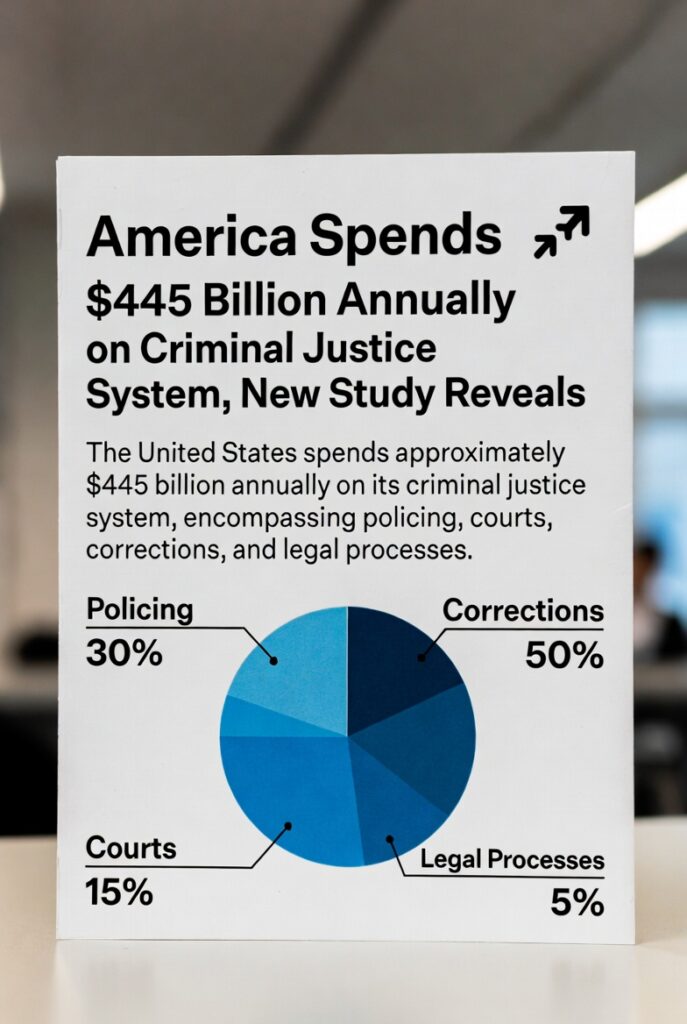
A sweeping new analysis of criminal justice spending in the United States has revealed that the nation spends approximately $445 billion annually on policing, courts, and corrections — a figure that has grown significantly over the past decade even as crime rates and incarceration numbers have fluctuated.
Breaking Down the Numbers
The study, published by the Prison Policy Initiative, examines spending across all levels of government. Corrections spending alone — encompassing jails, prisons, probation, and parole systems — accounts for a substantial portion of the total. Perhaps most striking is the finding that corrections spending increased by 27% from 2017 to 2025, despite correctional populations shrinking by 15% during the same period.
“We’re spending more money to incarcerate fewer people,” said the study’s lead author. “That should concern anyone who cares about government efficiency and public safety.”
Where the Money Goes
The largest single driver of corrections costs is staffing. Even as prison and jail populations have dropped, correctional payrolls continue to swell. Agencies rely heavily on overtime to meet staffing requirements and offer increasingly generous pay packages in attempts to relieve chronic understaffing — yet positions remain unfilled across the country.
Healthcare is another major cost driver. The incarcerated population has grown older and sicker, with rising rates of chronic disease, mental illness, and substance use disorders. Many states spend more on prisoner healthcare than on educational programming, vocational training, and reentry services combined.
State-by-State Disparities
Per-inmate costs vary dramatically by state. California spends over $130,000 per inmate annually — the highest in the nation — while states like Alabama and Mississippi spend less than $20,000. These disparities reflect differences in staffing levels, healthcare provision, facility conditions, and cost of living.
The study also highlighted the hidden costs borne by families of incarcerated people: phone calls, commissary purchases, transportation to remote facilities, and lost income. These indirect costs, estimated at tens of billions of dollars annually, disproportionately impact communities of color and low-income families.
Calls for Reform
Criminal justice reform advocates argue that the spending data makes a compelling case for alternatives to incarceration. Community-based supervision, drug treatment programs, mental health courts, and restorative justice initiatives all cost a fraction of what it takes to incarcerate someone in a state prison.
“Every dollar we spend locking someone in a cage for a nonviolent offense is a dollar we’re not spending on the things that actually prevent crime: education, housing, treatment, and jobs,” said a policy director at the Brennan Center for Justice.
The United States currently operates over 6,700 correctional facilities across all 50 states, ranging from small municipal lockups to massive prison complexes housing thousands.