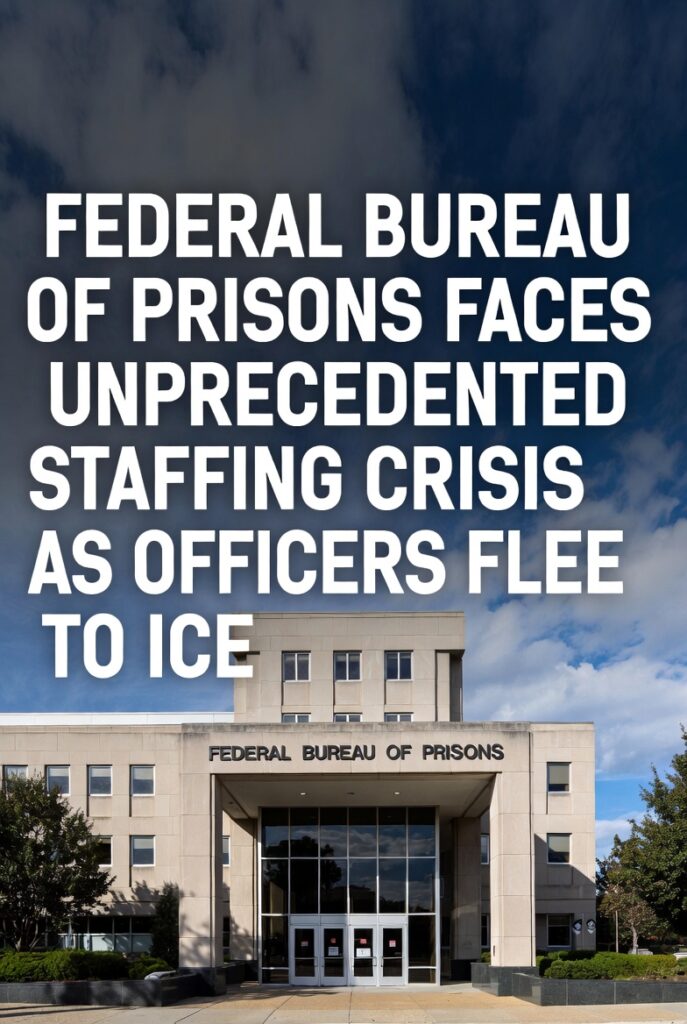
The Federal Bureau of Prisons (BOP) is grappling with what lawmakers are calling a “crisis point” in staffing, as the agency hemorrhages employees at an alarming rate. According to recent congressional testimony, the BOP lost a net of more than 1,800 workers in 2025 alone, with over 1,400 of those employees departing for positions at Immigration and Customs Enforcement (ICE).
A Perfect Storm of Departures
The exodus has been driven primarily by competitive hiring from ICE, which has been rapidly expanding its detention operations. ICE positions often offer comparable or better pay, more predictable schedules, and are perceived as less dangerous than working inside federal prisons.
“We are watching the Bureau of Prisons hollow out in real time. When you can’t staff a federal prison, you can’t keep anyone safe — not the officers, not the inmates, not the public.” — House Democrat, February Oversight Hearing
The staffing shortage has forced many facilities to operate on mandatory overtime, with corrections officers regularly working 16-hour shifts. At some institutions, non-custody staff — including teachers, counselors, and administrative workers — are being pressed into service as correctional officers, a practice known as “augmentation” that has long been criticized by unions and oversight bodies.
Retention Incentives Fall Short
In January, the BOP rolled out new retention incentives for frontline employees, offering temporary pay boosts between 5% and 25%. However, early indications suggest these measures have not stemmed the tide of departures.
The federal prison system currently operates 122 institutions across the country, housing approximately 158,000 inmates. With fewer officers available, facilities have been forced to limit inmate programming, restrict movement within prisons, and in some cases lock down entire housing units for extended periods.
Safety Concerns Mount
The Government Accountability Office (GAO) has documented widespread safety concerns linked to understaffing. Assault rates have climbed at multiple facilities, and response times to emergencies have lengthened. At several federal correctional complexes in Texas and California, vacancy rates exceed 30%.
The American Federation of Government Employees (AFGE), which represents federal corrections officers, has repeatedly warned that current staffing levels are unsustainable.
“You cannot run a safe prison with half the staff you need. Something is going to give.” — AFGE Representative
Congressional Response
House Democrats have pressured BOP leadership to develop a comprehensive workforce strategy, including competitive pay scales, improved working conditions, and better mental health support for officers. Some legislators have also called for emergency funding to address the most critically understaffed facilities.
The situation highlights a broader challenge facing the American corrections system: how to attract and retain qualified staff in an increasingly competitive labor market, while maintaining the safety and security of the nation’s 6,700+ correctional facilities.
Browse the Full Facility Directory →