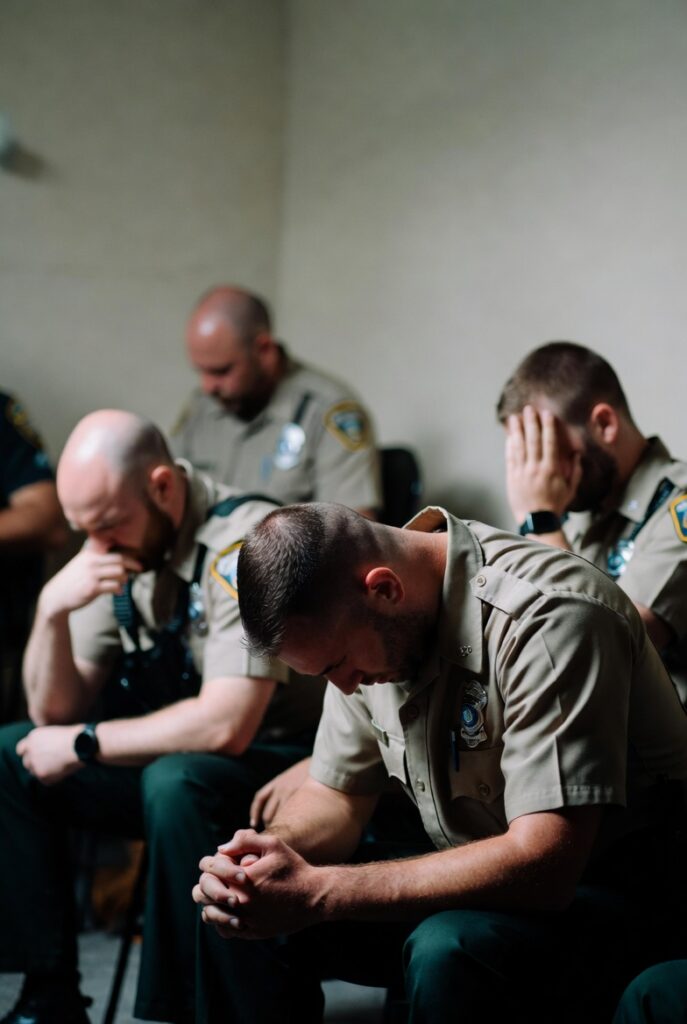
Behind the headlines about prison reform and inmate conditions lies another crisis that receives far less attention: the mental health and well-being of the approximately 430,000 corrections officers who staff America’s prisons and jails. New research paints a troubling picture of a workforce under extraordinary stress, with consequences that extend far beyond the prison walls.
PTSD Rates Rival Combat Veterans
Studies have found that corrections officers experience post-traumatic stress disorder (PTSD) at rates comparable to — and in some cases exceeding — military combat veterans. Estimates suggest that between 19% and 34% of corrections officers meet the clinical criteria for PTSD, compared to roughly 14% of combat-deployed veterans.
The sources of trauma are relentless: exposure to violence, witnessing self-harm and suicide attempts, managing inmates in severe mental health crises, and responding to emergencies in confined spaces. Unlike military deployments, which have defined endpoints, corrections work involves daily exposure to these stressors year after year.
Suicide and Substance Abuse
Corrections officers die by suicide at rates significantly higher than the general population and higher than most other law enforcement professions. The problem is compounded by a culture that discourages seeking help, stigmatizes mental health treatment, and valorizes toughness.
Substance abuse rates are also elevated. Many officers turn to alcohol or drugs as coping mechanisms for the stress and trauma of the job. Long shifts, rotating schedules, and the emotional toll of the work make it difficult to maintain healthy relationships and support systems outside of work.
Understaffing Makes Everything Worse
The staffing crisis affecting corrections facilities nationwide directly impacts officer well-being. When facilities are understaffed, remaining officers must work mandatory overtime — sometimes 16-hour shifts or double shifts multiple times per week. This disrupts sleep, family life, and any semblance of work-life balance.
At Georgia state prisons, some officers report working 80+ hour weeks during staffing shortages. In New York, the Department of Corrections has faced lawsuits over mandatory overtime practices that unions argue are unsafe.
What Agencies Are Doing
Some corrections agencies have begun implementing peer support programs, where trained officers provide confidential support to colleagues in crisis. Others have partnered with mental health providers to offer free counseling services. A handful of states have passed legislation recognizing PTSD as a presumptive occupational disease for corrections workers, making it easier to access workers’ compensation for treatment.
However, experts say these efforts remain inadequate given the scale of the problem. “We ask corrections officers to work in some of the most stressful environments imaginable, and then we’re surprised when they struggle,” said a researcher at the University of New Haven. “We need to invest in their well-being the same way we invest in facility security.”
The well-being of corrections staff directly impacts the more than 1.2 million people incarcerated in state prisons and the hundreds of thousands held in county jails across the nation.