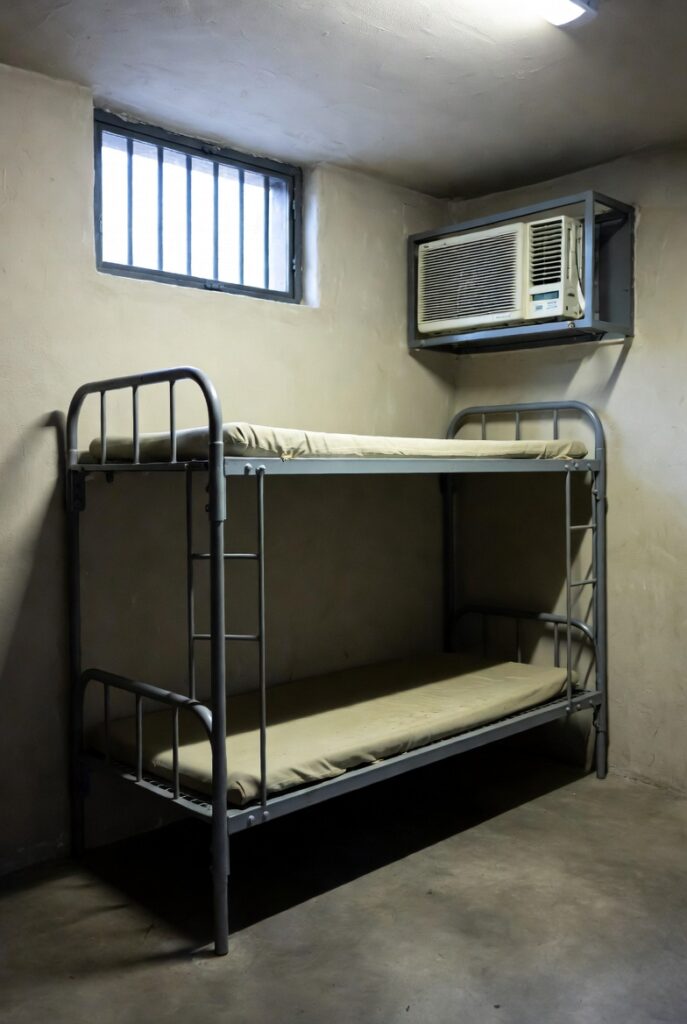
As climate change drives temperatures to new extremes, the lack of adequate cooling systems in American prisons and jails has become both a humanitarian crisis and a growing legal liability for states. Across the South and Southwest, incarcerated people are enduring indoor temperatures that regularly exceed 100 degrees Fahrenheit during summer months, leading to heat-related illnesses and, in some cases, death.
The Scale of the Problem
Approximately two-thirds of Texas correctional facilities have only partial or no air conditioning — a particularly alarming statistic given that the state regularly experiences heat waves with temperatures exceeding 110°F. The Texas Department of Criminal Justice operates over 100 prison units, many built decades ago without climate control systems.
The problem extends well beyond Texas. Facilities in Louisiana, Mississippi, Alabama, Georgia, and Florida face similar challenges. In many of these states, prisons built in the mid-20th century were designed with little consideration for extreme heat, relying instead on natural ventilation that proves wholly inadequate during modern heat waves.
Legal Battles Intensify
Lawsuits challenging prison heat conditions have increased significantly. Courts have found in several cases that exposure to extreme heat can constitute cruel and unusual punishment under the Eighth Amendment. In a landmark Texas case, a federal judge found that temperatures above 88°F in housing areas posed a substantial risk of serious harm to inmates.
Legal advocates argue that the Constitution requires prisons to maintain livable conditions. “You don’t forfeit your right to survive when you enter a prison,” said an attorney with the Texas Civil Rights Project. “Making someone sit in a concrete box at 115 degrees is torture.”
Legislative Efforts Stall
In Texas, a bill that would have required the Department of Criminal Justice to install climate control systems in all facilities by 2032 passed the state House but failed to advance in the Senate before the legislature adjourned. The bill’s failure disappointed advocates who have spent years pushing for the measure.
The cost of retrofitting aging prison infrastructure is substantial. Estimates for air conditioning all Texas prison units range from $500 million to over $1 billion, depending on the approach. Critics of the expenditure argue that the money would be better spent on other priorities, while supporters counter that the cost of inaction — in lawsuits, medical expenses, and human suffering — is far greater.
Vulnerable Populations at Greatest Risk
Older inmates, those with chronic medical conditions, and people taking certain psychiatric medications are particularly vulnerable to heat-related illness. Many common medications, including antipsychotics and blood pressure drugs, impair the body’s ability to regulate temperature.
With the aging of the incarcerated population — the number of people over 55 in prison has increased dramatically over the past two decades — the heat crisis is expected to worsen unless significant investments are made in facility infrastructure.
Search our facility directory for information on specific prisons and jails, including locations in heat-affected states.